Showing posts with label Missionary musings. Show all posts

Friday, February 28, 2014

Missionary Musings :: thoughts from the road.

My closest friend is fluent in any number of languages.  It seems the grand total changes from week to week, "Oh, my Korean is worse than my Estonian - which is really pretty awful" he prattles away during a break from his language lessons.  His goal is to know a double-digit number of languages - more than a dozen, at least.  He's Ukrainian, so this view isn't really seen as bizarre or special - probably half of my friends speak a set of four standard languages and one additional obscure language.

I'm terrible at languages.  I failed out of Spanish class in middle school, muddled my way through German in High school, held to the bare minimum assignments in French throughout college, and learned conversational Russian and Ukrainian along the way.  By American standards, I am a linguist and a polyglot.  By Ukrainian standards, I'm adorable for trying.

When I returned to Lviv to serve full time, it became clear that I was going to have to buckle down and force myself to learn Ukrianian.  My closest friend and I spent an entire month having lessons whenever I felt like it.  If I was awake and ready to learn at 1 AM, a lesson commenced at 1 AM.  I'm a miserable learner and I spent the entire month angry and bitter at the Ukrainian language.  I'm not proud of my behavior during language lessons.  I throw tantrums.  It's really embarrassing.  Over time, we have learned that I need extremely difficult lessons for 15 minutes at a time and then a cool off period.  This is real.  I wish I was joking, and that - like a normal person - I could just sit down, study, and then speak a foreign language.

Nazar getting swallowed by the giant chair before speaking to a large membership church. 

It was during one of the darkest days of that January, when I was mentally and emotionally exhausted from language acquisition that my closest friend explained to me why he loved learning languages so much.  He told me, "I believe that God fully revealed himself through the world's languages.  Every time we learn a new language, we learn a little bit more about God's character."  And I think he's right.

Every language has a little bit of God to add to the world.    

Until you speak the language and grasp at least that much of the culture, you have very little to add to the conversation.  You can listen, you can be present, you can pray - and these are HUGE aspects of mission.  But, if you intend to join the conversation and challenge injustice and offer Christ through proclamation - language is a necessity.

I was being rushed to the hospital when I said my first sentence in Russian.  My friend's father was driving, and trying to buckle my seat belt while swerving through the streets of our small Russian city.  I looked at him and I said, "Ya saam." I can do it myself.  We had learned it just a few days before, but this was honestly the first time I had ever said two words together in Russian - and a complete sentence none the less!  As my foot swelled two sizes too big, my smile swelled, too.  I was so proud of that sentence.  The next day, as I hobbled on my crutches, a teacher's husband stopped me on the streets and asked, "Kak naga?" How is your leg?  I answered "harasho"- good.  It was my first full conversation.

But what I remember most strongly about these two conversations was the incredible sense that I had spoken to Russian people for the first time.  Now - my host-brother had valiantly translated everything for me for two weeks by this point, but at this moment there was something deeper and more beautiful.  It was like the connection was truly mine.

It was the first time I saw the beauty and brilliance of languages.

Two nights ago, I was coming home at about 10 at night.  A neighbor stopped me on the street and invited me to her house for tea.  Lyuba is probably older than my mother, but not by much.  She started the conversation in broken English, and exhaled an audible sigh of relief when I responded in Ukrainian.  We drank tea and talked for more than an hour.  We told jokes, we talked about politics, and we talked about family:

"My boys were on the Maidan during the days of violence.  They both went, just to give their mother more to worry about.  The older one has a five year old son, and I said to him - 'You can't go, you have a child to take care of.' and he told me, 'Mom, that's why I'm going.' I cried so hard I thought I would die.  I just sat at the TV and cried while I watched everything.  I cried even harder when they came home to me."  

I told her about how much I've made my mom cry during this revolution - and apparently sons acting this way is a universal.

When I left, I told her that I thought most of the neighbors were afraid of me because they rarely speak to me.  She told me, "Well, once they find out from me that you speak Ukrainian, they're all going to want to talk to you - so get ready."

Language is connection.  Language is life.  Language is mission.


Monday, January 13, 2014

Missionary musings :: thoughts from the road

Grandma Airgood would sit and listen to the police scanner all day.  The white noise interrupted by intermittent blasts of static-y voices would compete against the blaring television to see who could portray a scarier version of life.  We would sit as a family and watch 9-1-1 Emergency and pause it only when the scanner beeped.  As the screeches droned forth from the little box, I realized that there were codes I didn't understand - codes that grandma knew by heart.  I was very young and I didn't recognize the street names, but grandma did.  With each announcement from the scanner, grandma would call out the name of a friend or family member who lived near that place or might be near that place and what had happened to them.  Like the most realistic game of Clue, she would call "Sam, dead in a house fire" or - "That's Sharol - she is driving in that neighborhood right now."

Grandma Airgood in the 1970s with cousin Kim

This was in the days before cell phones - so we would sit together huddled around the little black prophet box and wait for more news or for our nearly-departed to swing open the screen door and enter back into our lives. 

At five or six, my very frail grandfather and I were playing hide and seek.  I pushed up against the basement door, and as it swung open I fell down the basement steps.  I landed on the hard concrete at the bottom. The last words I heard before passing out were my grandmother's: "He's dead.  People die from falls like that."

As an Airgood, I must constantly battle the negativity monster.  For every positive thought that I have, I have three negative ones.  I'm constantly filled with judgement for those who are less than me and contempt for those who are better than me.  My first thought on any topic is usually negative. I naturally assume that failure will be the order of the day.

Some days I conquer the negativity monster, some days I cower in terror from it.  For me, the single greatest challenge I face is finding that the negativity monster should have won.  When I trust someone and they disappoint me it can be devastating - because deep down I always believed they would hurt me.

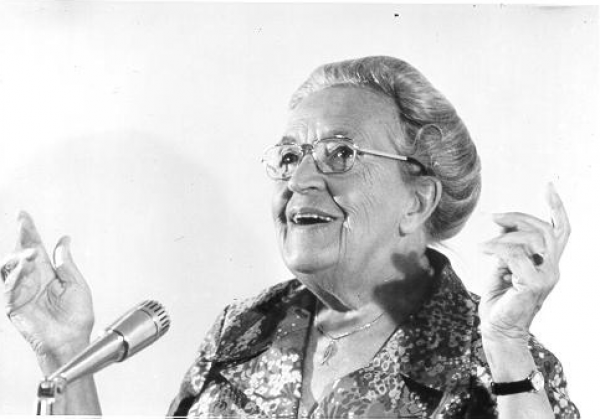
When Corrie Ten Boom sat in prison cells for her crime of saving Jewish lives, her sister Nollie signed every letter from the outside  - Christ is Victor.  Her other sister, Betsie, died in Ravensbruck death camp - Betsie often told Corrie that "There is no pit so deep that God is not deeper still."


I have tremendous adoration for these saints who can see only good.  Corrie writes that after her sister's face had been slit open by the whip of a Nazi commander, her sister said, "Don't look at it - only look at Jesus."

I love these people, but I'm not one of them.

My mentor in college told me once that for Jesus there were three tomb days and one resurrection day - and that we shouldn't expect better odds than that.  My mentor chose a Tuesday morning class when half the students had skipped to share the story of great tragedy and loss in his life.  It was deeply personal and we all cried with him.  When he and I had lunch later that day, he told me that he didn't even have a photograph to remember her by, because they had all been stolen over the years.  Three times thieves broke into his house, backed a moving truck up to the window, and carted every item out of the house.  His Peruvian neighbors all just assumed that the "gringo" was moving out.  On three different occasions, every last scrap of paper in his home was stolen.  It was on this Tuesday that he told me about tomb days and resurrection days.

I don't trust Christians who seem to have too many resurrection days, or, rather, I don't trust Christians who don't spend any time in the tomb.

Itineration is an important part of missionary service.  I love itinerating - I love visiting churches and meeting the people who support me.  But itineration is hard.  I never lie while I'm talking at churches.* But I obviously focus on the resurrection days a good bit more than the tomb days.  This is just a fact of life for missionaries.

Kathy Clark and I pulled up to the church in her little car.  Rev Clark had volunteered to drive me around as I itinerated and she pulled her balled-up alb out of the back seat just in case she needed it - and we went inside.  I had just been diagnosed with Lyme's Disease, and my whole body ached.  I preached at three services at three different locations, and I was doing pretty well.  My hands were pulling up into fists because of the arthritis, and my left foot was a club - but I was determined to make it through all three services.  I'm an active preacher, and at one point - for God knows what reason - I got down on one knee. I tried to stand up, but I was frozen.  If I wanted to stand, I was going to have to put all of my weight on my left foot.  For a minute, I thought I was going to have to stop and have Kathy Clark pull me back up.  I pulled myself up by swiveling around at the same time so no one would see me wince in pain.  It had been a hard year.  My community had faced tragedy.  I had been abused and harmed by people that I love and by people who didn't even know me.  I stepped on that foot and I felt all the pain and all the hurt and my whole face and body contorted into a ghastly grimace - and I knew that in just a moment I would have to turn around and smile at these nice people.

 And I did it.  And I finished the sermon.  And during the prayer time, the pastor announced that I had Lyme Disease and everyone sympathetically gasped  which is apparently the appropriate reaction.

And after the service, the older lady who headed up the mission committee invited Kathy and me out to lunch.  It was buffet style, and at one point, she turned to Kathy and said, "My husband and I used to come here every Sunday.  This is the first time I've been here since he died."  She started to cry and Kathy comforted her.  Kathy shared something from her life.  And then I started sharing about what had happened.  I told them about all the muck that our community had waded through, and I got very personal and very real.  I told them about putting my weight on my left foot.  And we sat together and we were very real with each other.  We all shared each other's burdens and it was beautiful.

It made me happy just to share life together with other Christians.  I didn't have to put on the missionary face and highly edit what I shared and what I kept to myself.  I'm not very good at wearing the missionary face, and that's probably for the best.  

One of the biggest problems that missionaries face is the expectation of maintaining a perfect exterior.  I don't know why we fall for it - but we do.  We believe that people have to see us as super Christians.  And maybe our faith is extraordinary.  By no choice of our own, we often find ourselves in situations where reliance on God is the only option.  Maybe over time our capacity to receive grace grows.  Maybe we are energized by being around so many faithful people after a long time of slowly trudging along in the jungle alone and it just seems that we are super Christians.

If you have read the private letters of Mother Teresa, you have a pretty clear idea of the sense of emptiness and loneliness that often accompanies missionary service.  If you haven't, maybe it's easier to believe that missionaries are super-human faith balloons - that just keep getting pumped up more and more.  This is not the truth.  We are embers that have fallen out of the fireplace - the lucky among us find other embers or start a new fire to keep our glow.  But many never have that chance.  Many of us burn out.

Olya showed up at our student center one day and we talked for a bit - she was a bit loud and dressed like a hipster.  A few days later I was in Kyiv and saw Olya with a group of her friends and was introduced to everyone.  Nazar was shy and quite and nothing like Olya.  I met both of my best friends in Ukraine within three days of each other.  I had lived in Ukraine for months before I met them. I was an ember just about to fade away when they came into my life.  Their bright faith and riotous laughter sustained me through some dark days.  I'm truly blessed, to call Ukrainians best friends.  I lived in Korea for seven months without even making an acquaintance to call my own.  To have two Ukrainian friends who would do anything for me is more precious than anything in my life.  They held me accountable to learning Ukrainian, held me up when I was down, and held me together when my world came crashing down.  I owe so much of my life and ministry to them - and I thank God every day for putting such wonderful friends in my life.

This is life.

I think this is what is so often missing from the missionary narrative.  Missionaries must live.  They need to have honest friendships and fun and messes and pain.  They need to sit around a table with people in whom they can trust and share deep pain.  They need to hold hands at the train station before saying goodbye.  They need to love and be loved.  Missionaries are human.

We are all human.    

  *I am very thankful that I serve in the United Methodist Church with the General Board of Global Ministries.  I don't have to raise a dime of my salary.  When I'm fundraising - I'm raising money for the next kid who comes along.  There is no pressure to raise money.  Many of my missionary friends in other denominations had to raise their full support before they could even go to the field - many still have thousands of dollars left to raise before they can go.  This is a tragedy, truly.  

Wednesday, January 8, 2014

Missionary musings :: thoughts from the road.

I knew he was stoned from the first words of the conversation.  "Dude, you totally have to watch Inception.  No, like, totally, have a bowl and watch Inception."  The marijuana was medicinal, his chemo kept hunger far from his mind and he was wasting away to nothing.  The pot brought pounds to his body and quality to his life.  I bought a bottle of liquor on the day he died and only one friend yelled at me for drinking most of it that day.

I don't think that any missionary training class prepares you for the death of a loved one.

I remember visiting a church to hear a missionary speak once, and this was years after I had committed my life to serving the Lord somewhere without air-condition (oh, little did I know at the time, how worthless air-condition could be) but years before I had actually gone - and I remember realizing, as I entered this particular church for the first time, that I could pick out the missionary.  He was the most spiritual one there.  He was the one bouncing in his pew and clapping his way through every song.  His slide show was predictably missionary-esque and sported more than a hundred photos of "this is also the jungle."  This was the first time that I grew emotionally uncomfortable with the term missionary - it hasn't been the last.

Every time I have witnessed "missionary compounds" high on the hill over the unwashed masses, I have felt a pang of shame at the M-word.  Every time my place of privilege has opened a door, I wonder if I am doing the right thing by going through it.  Every time a well-intentioned old woman asks me if I have to learn Ukrainian because "they can't speak English there?" I cringe. Missionary math exists and is a real thing, which is real.

I am a child of the King, but I was also raised by the Empire - and it is hard to remember this sometimes. It's a never ending Kramer vs. Kramer situation, really.  My value system has to come from somewhere, right?  I was taught that drinking alcohol is a sin, but clearly this isn't what the Bible says - so I take great precaution in accepting "biblical truths literally" but I see the way that "liberal academic scholarship" just wrings the life out of faith.  As a red-headed step child of the empire, I must be especially careful about the way I treat wealth, military power, colonization, sin-scales, and skin-color.  As a missionary, I need a constant reminder that God's kingdom and the empire I come from are not one-and-the-same.

In my college days, I read a number of biographies of missionaries.  My favorite was about the ministry of my French tutors and friends. The Schultz's went into the jungle in the 1950s and grew old and unfashionable there.  Janine emerged some decades later still wearing the same wool skirt she entered in.  John only had hair on his ears when they returned to the states.  I loved their biography, because it exuded the same humility that they did.  John never boasted about his fluency in seven languages.  Janine just pardoned my French constantly in class, and loved me in spite of myself.

I read another missionary biography once.  It was filled with hubris and pride.  It was a painful read.  No one was as satisfied with this missionaries' righteousness and accomplishments as he was.  He unnecessarily risked the lives of his wife and children on multiple occasions - refusing the convenient travel arraigned by his mission board and eventually being air-rescued by the military; he proudly boasted that God's will was done.
Mother Teresa constantly insisted that she was God's littlest.  Every time that someone lifts up "missionary" as something special and hyper-spiritual, I want to look them in the eyes.  I want them to see how painful it can be to live as a missionary.  I want them to see how ordinary I am.  I want them to see how helpless I am.  I want them to see how much I struggle with faith - with the very concept of faith - every day.  I want them to see me - not some stone statue saint on a pedestal - but me - just Michael, little Michael who crawled on his belly under all of the pews during worship, big Michael who can't ever seem to conjugate anything right and always talks like he's speaking around a Big Mac. I'm so little and flawed and lost.    

When my friend was in his final days, I wondered if I would lose my faith when he died.  At some point in each of our faith journeys, we all must come to the realization that God is not "good" in that warm and fuzzy kind of way that we think about "good."  God is good, all the time.  And all the time, God is good.  And yet women miscarry, teenagers kill themselves, and the pain of this world is often unbearable. When my friend died, I was devastated and heartbroken - but within hours I knew that I would be alright.  I remember frantically searching for a hymnal - and yelling at my friend who graduated from the music school with a gold star for not being able to play it on the first try.  I desperately wanted to sing Hymn of Promise.

"In our death, a resurrection; at the last, a victory, unrevealed until its season, something God alone can see."

I understood that my late friend could see that victory - and if he could see that victory, then it must be true.  I'm certain that this is the kind of circular logic that any atheist would love to get his hands around to try and choke the life out of my faith, but I'm ever so content with it.  I realized the great truth of faith that day.  I learned a lesson in hope.  I learned what God's goodness really feels like.

I feel like I can't begin a conversation about my theology of mission without beginning at the story of this phone call and my friend's death.  I don't want to talk about this theme unless it's understood that I'm just a person.  I'm a missionary, a teacher, a pastor by some accounts, a translator, and a writer - but none of those things matter if I'm not a human, too.  This is my authentic voice, and it is paramount that as I begin writing about mission theology, that it is understood in this context.  Over the next few months, I want to explore some themes of mission theology - but I want them to be read with a grain of salt.  Please read them with an understanding of who I am and where I come from.

Thanks, Michael.